
Enrollment and completion matter. But they don’t automatically lead to employment, advancement, entrepreneurship, leadership, or economic opportunity.
Career mobility connects education, lived experience, and technical preparation to meaningful next steps.
For institutions, the goal is to make that connection more intentional and measurable.
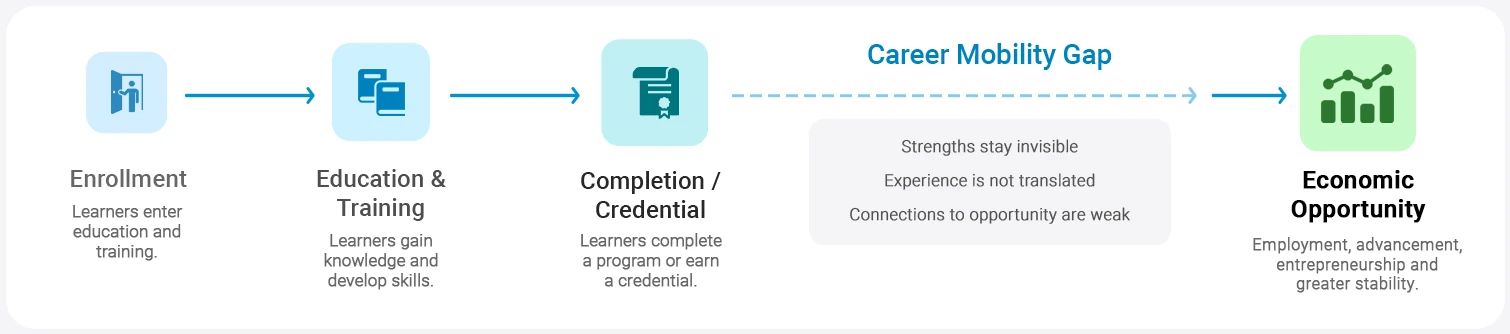
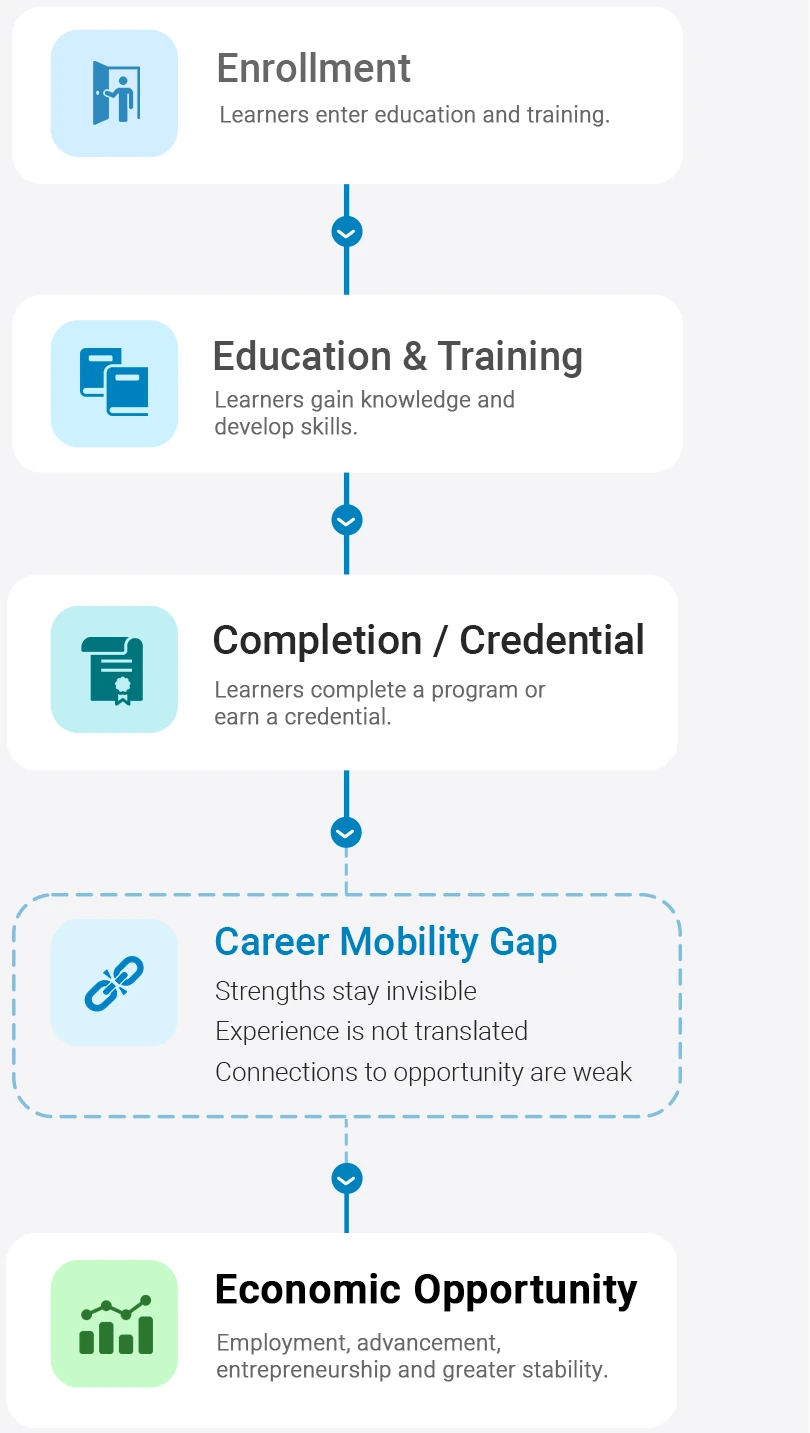
Institutions have built pathways into education and training. But completing a program, earning a credential, or developing technical skills doesn’t automatically create movement toward economic opportunity.
The gap appears when learner capability isn’t consistently recognized, translated, connected, or activated toward opportunity.
Career Readiness→ to Career Mobility
Career readiness asks whether learners are prepared for a next opportunity.
Career mobility asks a broader question: can learners continue turning their capabilities into opportunity — and can institutions support that movement consistently?
EnrollmentEconomic Opportunity
See the value you already carry.
Learners identify the strengths, experience, knowledge, and skills relevant to their goals.
Turn experience into professional value.
Learners make those capabilities visible through language, evidence, relationships, and career assets.
Take meaningful action toward opportunity.
Learners use what they have built to pursue education, work-based learning, employment, entrepreneurship, leadership, or advancement.
Economic Opportunity
Institutions may already have many of these pieces. The opportunity is to strengthen how they connect around the learner journey.
Help learners recognize and communicate the value they already carry.
Help learners build relationships and navigate educational and workforce opportunities.
Connect learning to applied experience, workplace capability, and leadership.
Turn skills, experience, and resourcefulness into entrepreneurial opportunity.
Extend practice, personalization, and navigation with responsible AI and human support.
Strengthen staff practice and delivery so career mobility is reinforced consistently.
Strong supports create more value when they connect around learner movement.
Most institutions already have many of the pieces in place. The opportunity is to connect them so learners experience a clearer path from education to opportunity.
AI and changing roles are reshaping how people find work, communicate their value, and adapt. Career mobility helps learners navigate that change while strengthening the human capabilities that still matter.
Aspira helps institutions identify where learner movement is experiencing friction, strengthen the right capabilities, and measure progress toward opportunity.